Aquatic Plants
Aquatic plants play an essential role in healthy pond ecosystems. Beyond improving water quality, reducing shoreline erosion, and absorbing excess nutrients, vegetation provides critical habitat for fish and aquatic organisms. Plants offer cover for juvenile fish, support spawning activity, and provide substrate for the organisms that form the foundation of the food chain. A balanced combination of native submersed, emergent, and shoreline vegetation can enhance habitat quality, improve aesthetics, and reduce long-term management demands.
However, excessive aquatic vegetation can negatively impact fish growth, reduce recreational value, and limit access for anglers. Dense plant growth can disrupt habitat balance, restrict open water areas, and create management challenges. When large amounts of vegetation die and decompose, oxygen consumption during decomposition can reduce dissolved oxygen (DO) levels and increase stress on fish populations.
Invasive aquatic plants can further disrupt pond ecosystems by outcompeting native vegetation and reducing habitat diversity. Aggressive species often spread rapidly, forming dense mats or colonies that limit sunlight penetration, alter fish habitat, and interfere with recreational use. Excessive invasive plant growth can also contribute to declining water quality by trapping organic matter, increasing nutrient cycling, and creating conditions that promote additional plant and algae growth.
Maintaining vegetation at appropriate levels is essential for a healthy and productive fishery. Management strategies should focus on preserving beneficial native plants while controlling excessive or invasive growth. Hand removal and mechanical control methods are often effective approaches because they physically remove plant biomass and nutrients from the system, helping reduce organic accumulation and maintain habitat balance.
Early identification and proactive management are critical for preventing invasive species from becoming established. Regular monitoring, maintaining diverse native vegetation, and addressing problematic plants before they spread can preserve habitat quality and reduce the need for more intensive long-term control efforts.
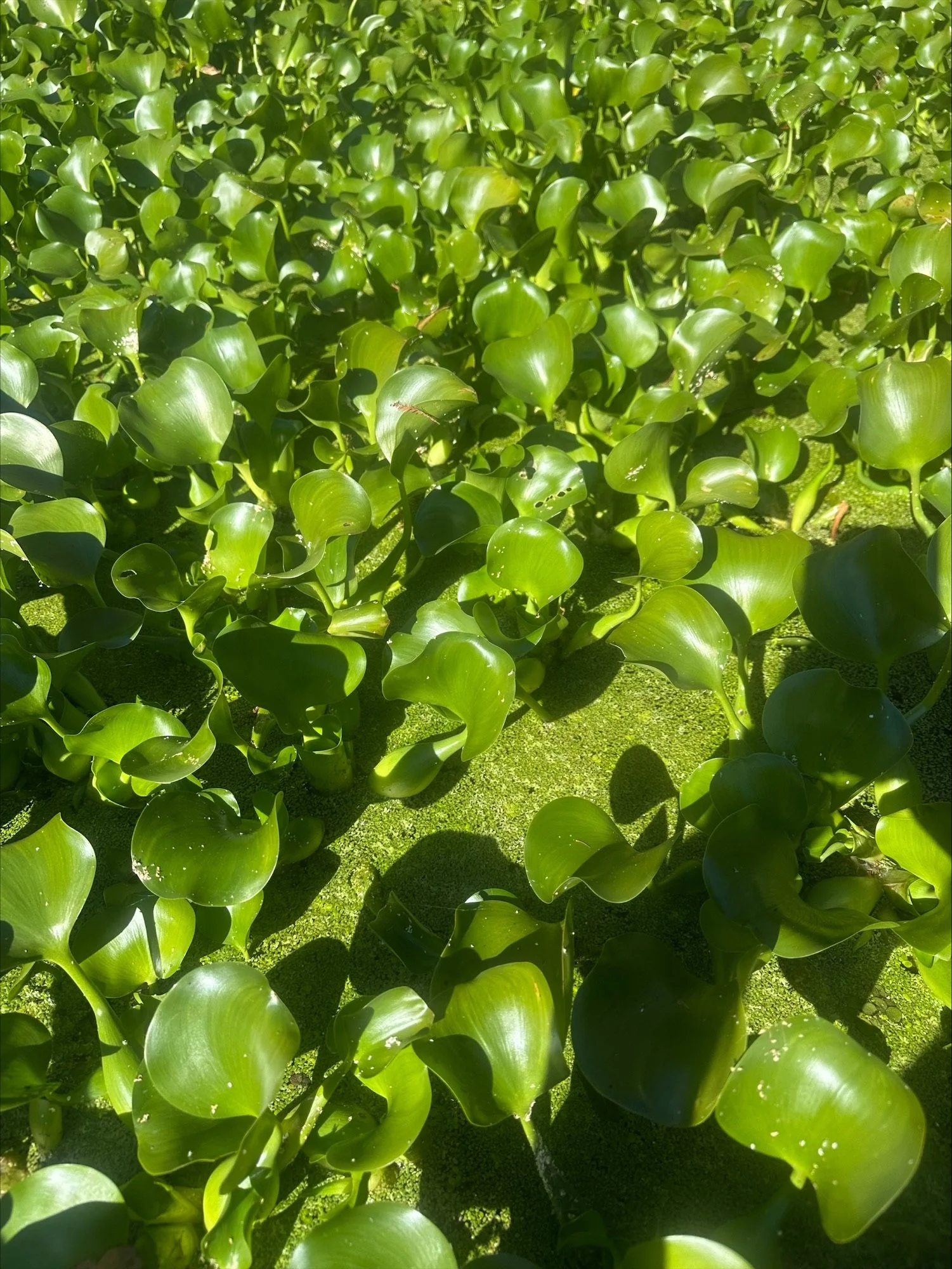
Image: Water Hyacinth and Duckweed 